Introduction
Distributed software ecosystems are not inherently slow due to hardware limitations, cloud provider constraints, or even network latency. In the early stages of a system, everything is relatively simple: there may be only a few services, a single database, and a limited number of users.
As the system grows, however, this simplicity begins to fade. Traffic increases, data volumes expand, more services start to rely on the same datasets, and users begin to expect near-instant responses.
At this point, the database becomes a bottleneck, not because it is poorly designed, but because it is required to handle an increasing volume of requests at a higher frequency. This is where caching becomes essential.
What Caching Actually Does
Caching is not just about making things faster; it is about changing how our system uses data. Instead of going to the database every time, we keep a copy of frequently accessed data closer to the application and reduce repeated work. As a result, we trade a bit of complexity for a significant gain in performance and scalability.
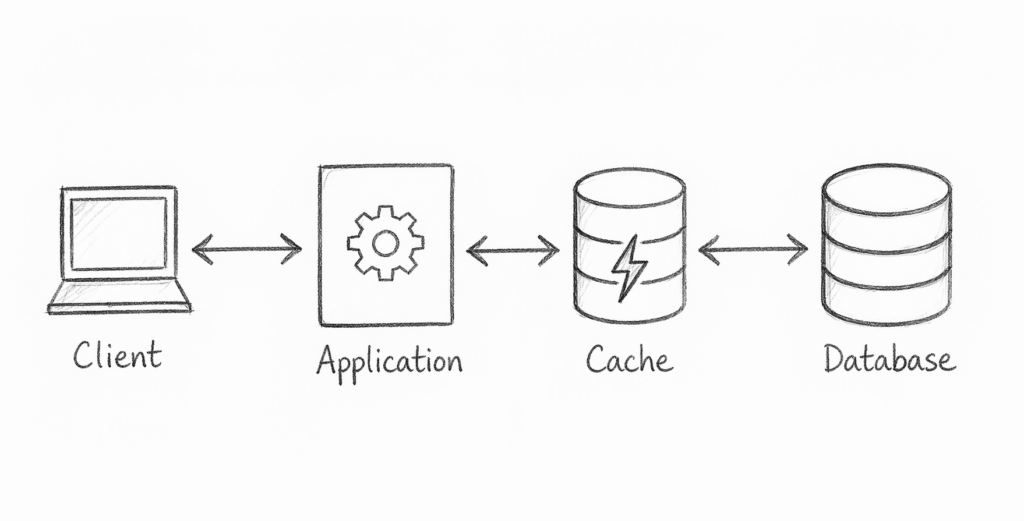
In simple terms, caching allows our system to return common data quickly without repeatedly querying the database.
Why different Solutions exist
Different systems have different requirements. Some prioritize read performance, while others require strong consistency. In addition, market demands vary and that is why some systems must handle heavy write workloads, while others can tolerate slightly stale data.
Because of these reasons, there is no single solution for caching. Instead, we use different caching strategies or solutions, each of which defines how data is read, how it is written, when the cache is updated, and who is responsible for managing the process.
Furthermore, caching sounds easy: Just store data and reuse it!. But in practice, it introduces real challenges:
- What happens when data changes in DB?
- Who is responsible for updating the cache?
- What if the cache becomes inconsistent with the database?
- How do you avoid serving stale or incorrect data?
This is why caching is not just a performance trick. It is an architectural decision and we need different strategies to support our architecture and architectural characteristics.
Caching Strategies
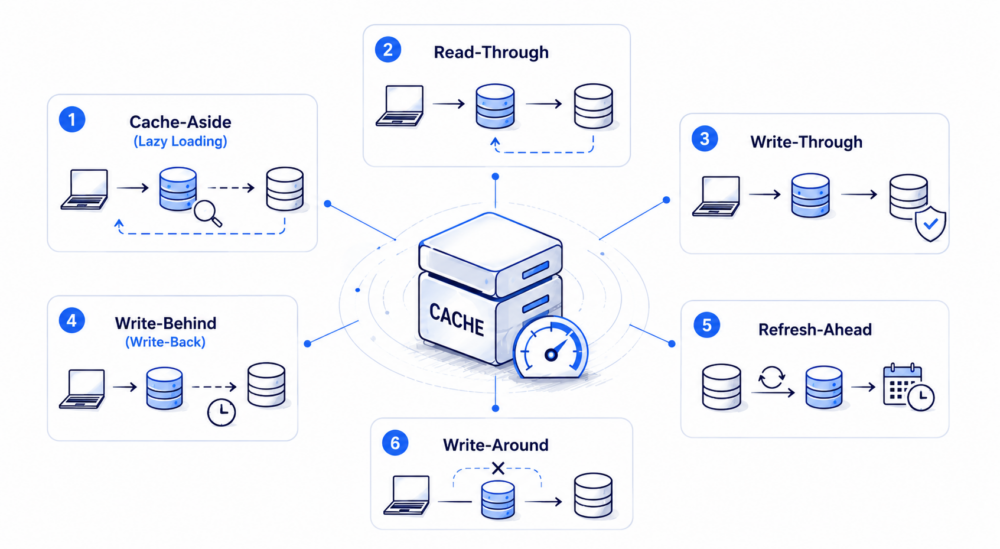
Caching, as explained above, is not a single technique but a set of strategies. Each strategy defines how the application interacts with the cache and the database, especially in terms of read and write behavior.
The differences between these strategies are not minor implementation details. They directly affect performance, consistency, complexity, and failure handling.
In the following , we take a look at the most commonly used caching strategies briefly. Each one represents a different way of thinking about how data should flow through a system.
1) Cache-Aside Strategy
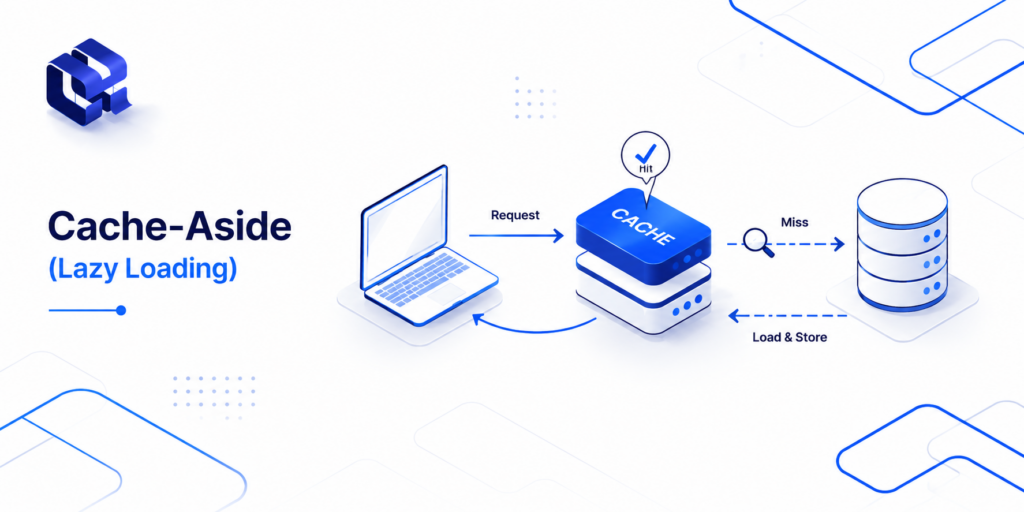
Cache-aside is the most widely used caching strategy in applications. In this approach, the application itself is responsible for interacting with both the cache and the database. When data is requested, the application first checks the cache. If the data is available, it is returned immediately. If not, the application retrieves the data from the database, stores it in the cache, and then returns it to the client.
The main advantage of cache-aside is its simplicity and flexibility. The application has full control over what gets cached, when entries expire, and how invalidation is handled. This makes it a strong fit for read-heavy systems where only a subset of the data is frequently accessed.
However, the application also becomes responsible for maintaining consistency between the cache and the database, which can introduce stale data problems if updates are not handled carefully.
To better understand this strategy, see the article linked in the button below.
2) Read-Through Strategy
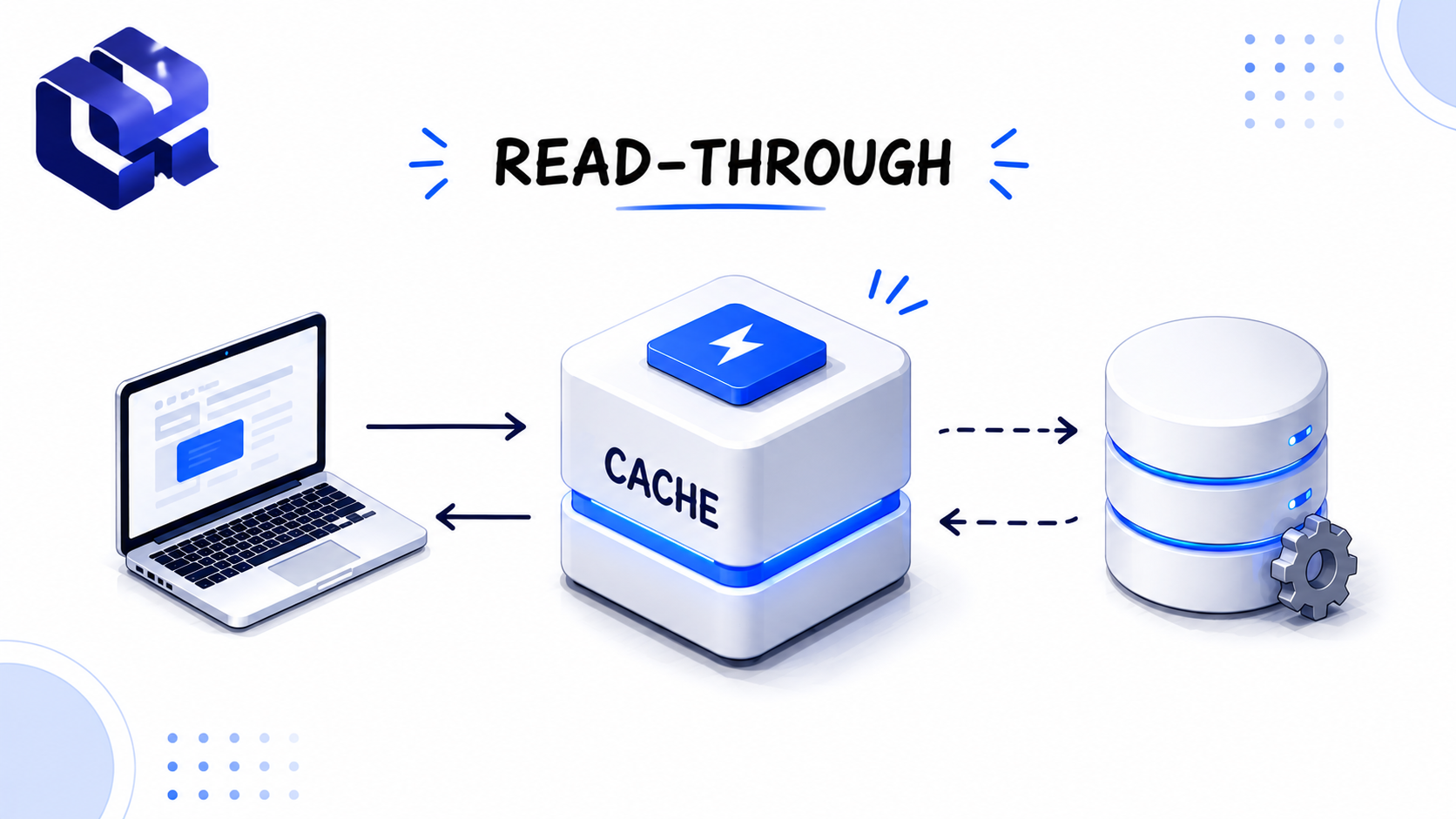
In a read-through strategy, the application communicates only with the cache layer, while the cache itself is responsible for retrieving missing data from the database. When the requested data is not found in the cache, the cache automatically loads it from the database, stores it, and returns it to the application.
This approach reduces the amount of caching logic inside the application and centralizes cache management. It can simplify development and create more consistent caching behavior across services.
However, it also makes the cache layer more complex because it must understand how to communicate with the underlying database or storage system. Read-through is commonly used in platforms and infrastructures where caching is provided as part of the data access layer rather than being managed directly inside application code.
3) Write-Through Strategy
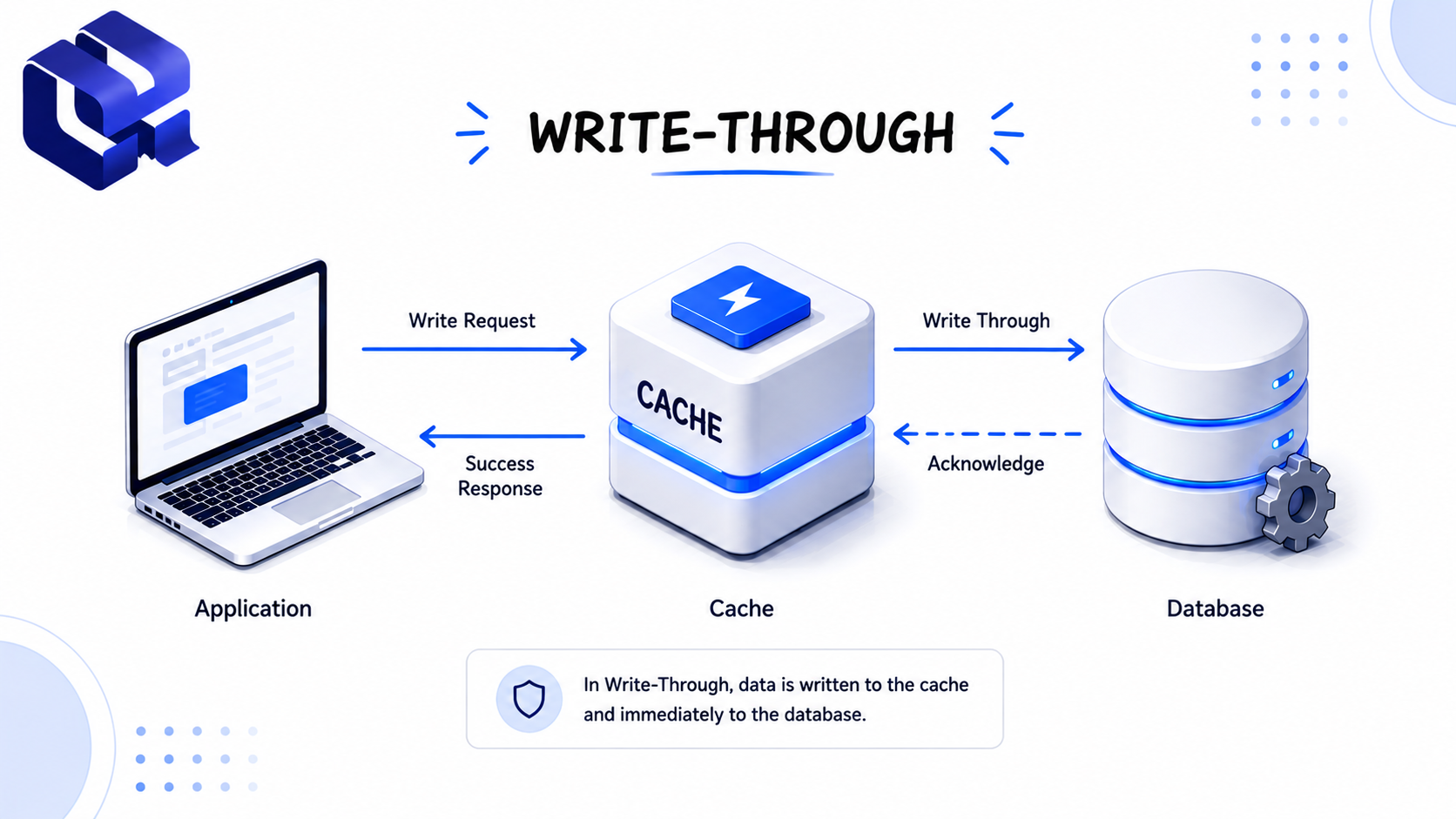
Write-through caching updates both the cache and the database during every write operation. When data changes, the application writes the new value to the cache, and the cache immediately persists the same change to the database. This ensures that the cache always contains the latest version of the data and reduces the likelihood of stale reads.
The primary advantage of write-through is consistency. The trade-off is increased write latency, because every write must complete both cache and database operations before the request is considered successful. This strategy is often used in systems where read performance is important but serving stale data is unacceptable.
4) Refresh-Ahead Strategy
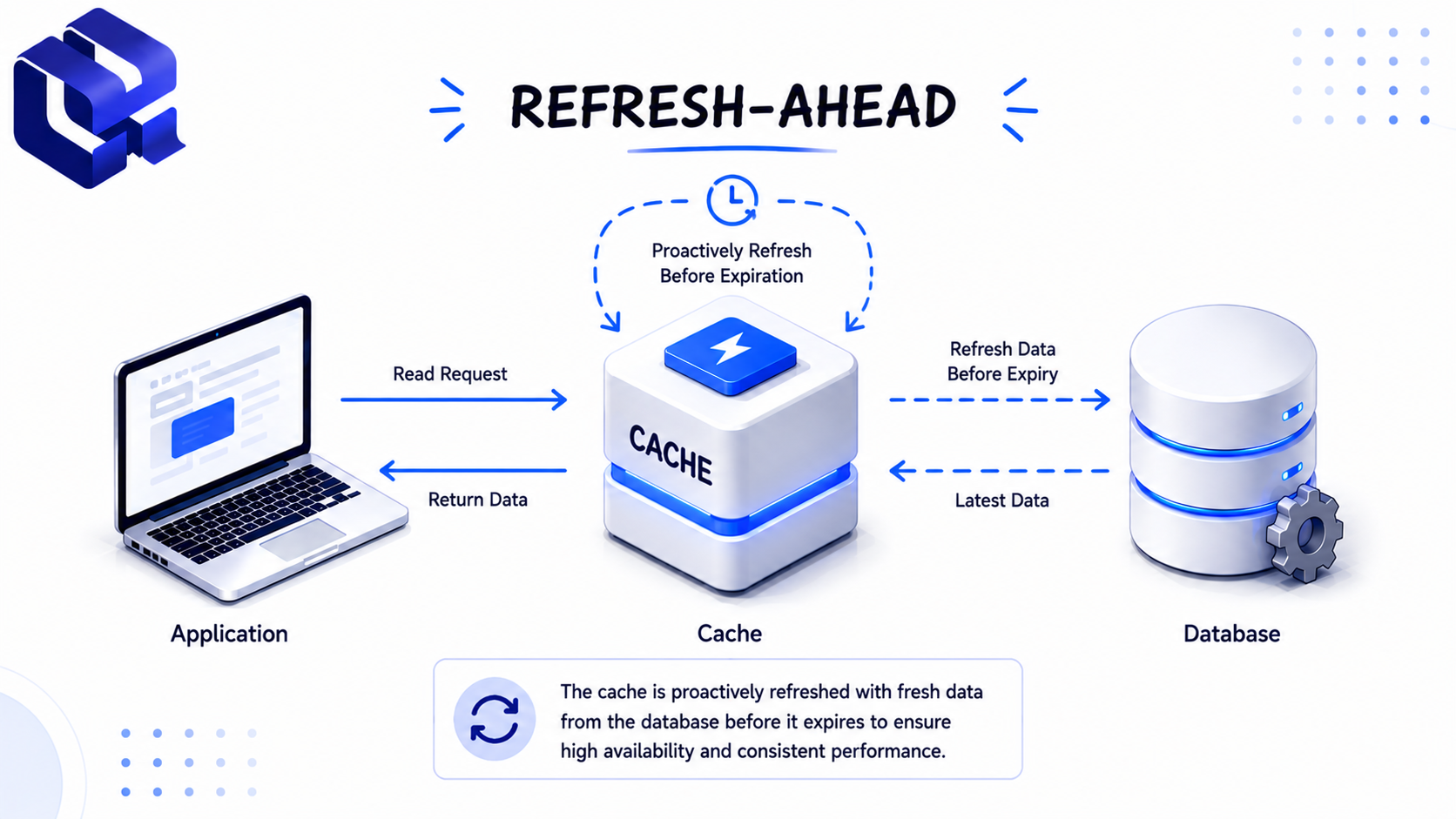
Refresh-ahead caching proactively updates cache entries before they expire. Instead of waiting for a cache miss, the system predicts which data is likely to be requested again and refreshes it in the background.
This strategy is useful for hot or highly requested data where predictable low latency is important. Examples include trending products, frequently accessed configuration data, or popular content pages.
The challenge with refresh-ahead is deciding what should be refreshed and when. If implemented poorly, the system may waste resources refreshing data that is rarely used.
5) Write-Around Strategy
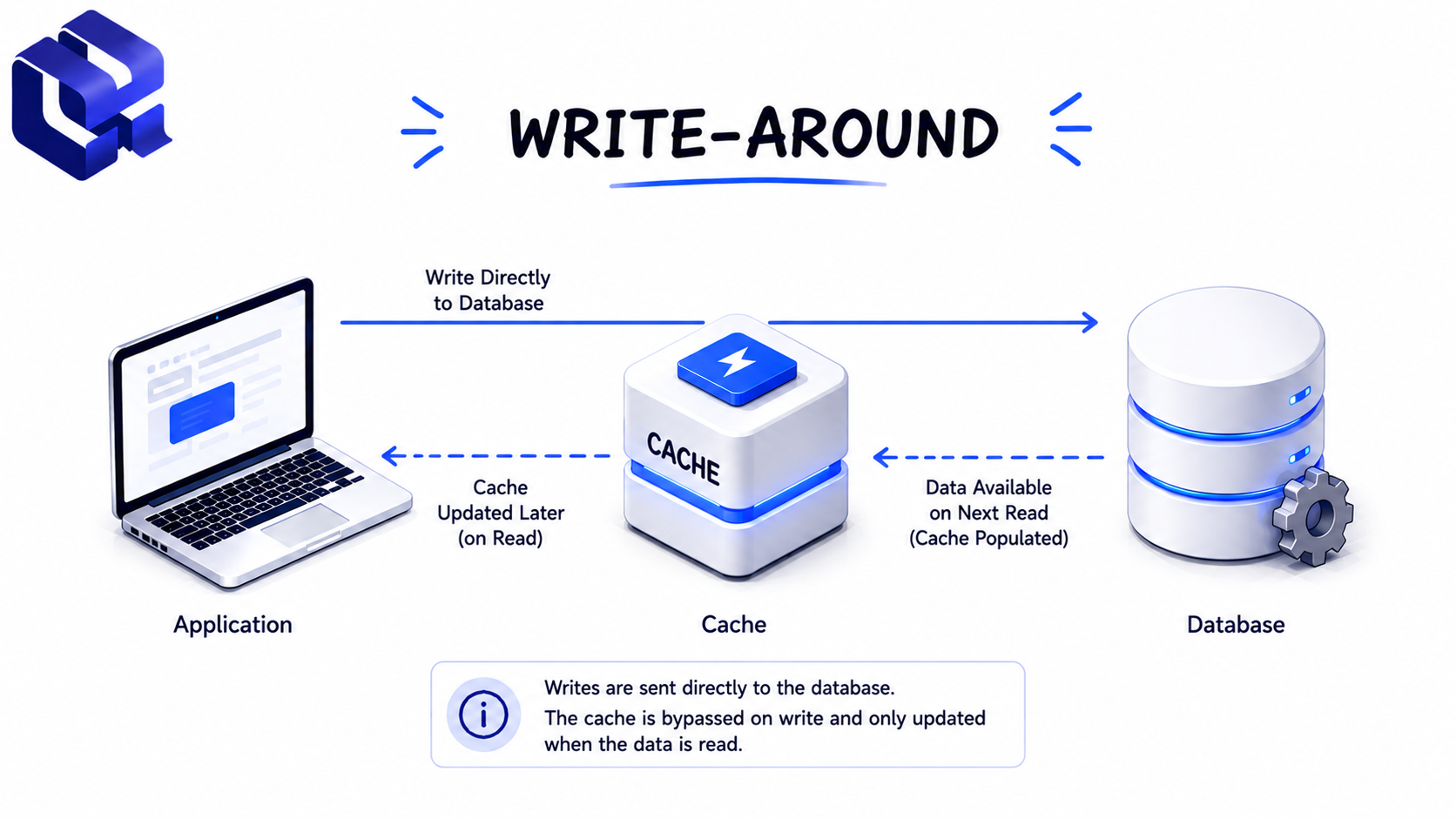
Write-around caching bypasses the cache during write operations. Data is written directly to the database without updating the cache. The cache is only populated later if the data is requested through a read operation. This prevents the cache from being filled with data that may never be accessed again.
Write-around is useful in systems where large volumes of data are written but only a small portion is read frequently. The downside is that recently written data will initially result in cache misses, meaning the first read after a write is usually slower because it must retrieve data directly from the database.
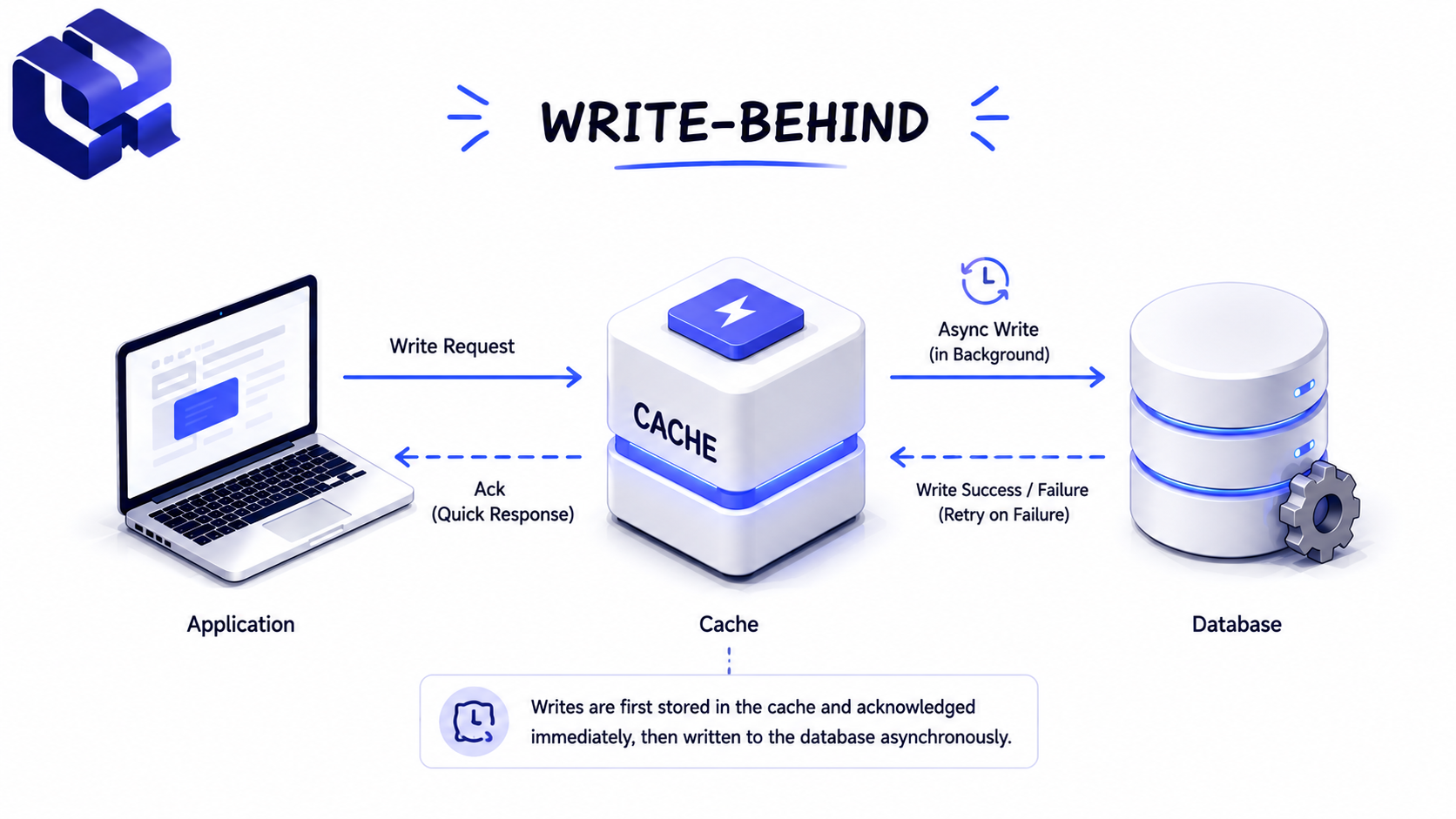
6) Write-Behind Strategy
Write-behind, also known as write-back caching, delays persistence to the database. Instead of writing directly to the database during each update, the application writes only to the cache first. The cache then asynchronously flushes accumulated changes to the database after a certain interval or based on predefined conditions.
This strategy can significantly improve write performance because the application does not wait for database operations to complete. It is especially useful in systems with heavy write workloads such as analytics, logging, metrics collection, or event processing.
However, the delayed persistence introduces risk. If the cache fails before pending updates are written to the database, data may be lost. As a result, write-behind systems require careful failure handling and operational monitoring.
Conclusion
Caching is one of the most important techniques in modern software architecture because it directly affects performance, scalability, and user experience. However, caching is not a single solution. Different systems require different approaches depending on their consistency requirements, read and write patterns, and operational complexity.
- Cache-Aside focuses on simplicity and application-level control.
- Read-Through centralizes data loading inside the cache layer itself.
- Write-Through prioritizes consistency by synchronizing cache and database writes.
- Write-Behind improves write performance through asynchronous persistence.
- Refresh-Ahead reduces latency by proactively updating frequently accessed data.
- Write-Around avoids unnecessary cache usage by bypassing the cache during writes.
Understanding these strategies is therefore not just about improving user experience or application performance, but also about making informed architectural decisions. Choosing the right strategy means balancing performance, consistency, reliability, and maintainability based on the requirements of the system.